đ [EN] Lecture notes - 2
The Five Prayers of the Asbury Revival
Prayer is not only one activity with one form. Christian prayer includes many movements of the heart: waiting, asking, interceding, discerning, confessing, consecrating, and praying together. Understanding these different kinds of prayer helps believers recognize how God works in different seasons and situations.
The Asbury Revival cannot be explained by one single cause. It was not the result of one method, one leader, or one technique. Rather, it was surrounded by many kinds of prayer, many people seeking God, and many moments of obedience. These prayers prepared the way, protected what God was doing, helped people respond to needs, and kept the focus on Christ rather than on human performance.
Prayer and the Fruit of Revival
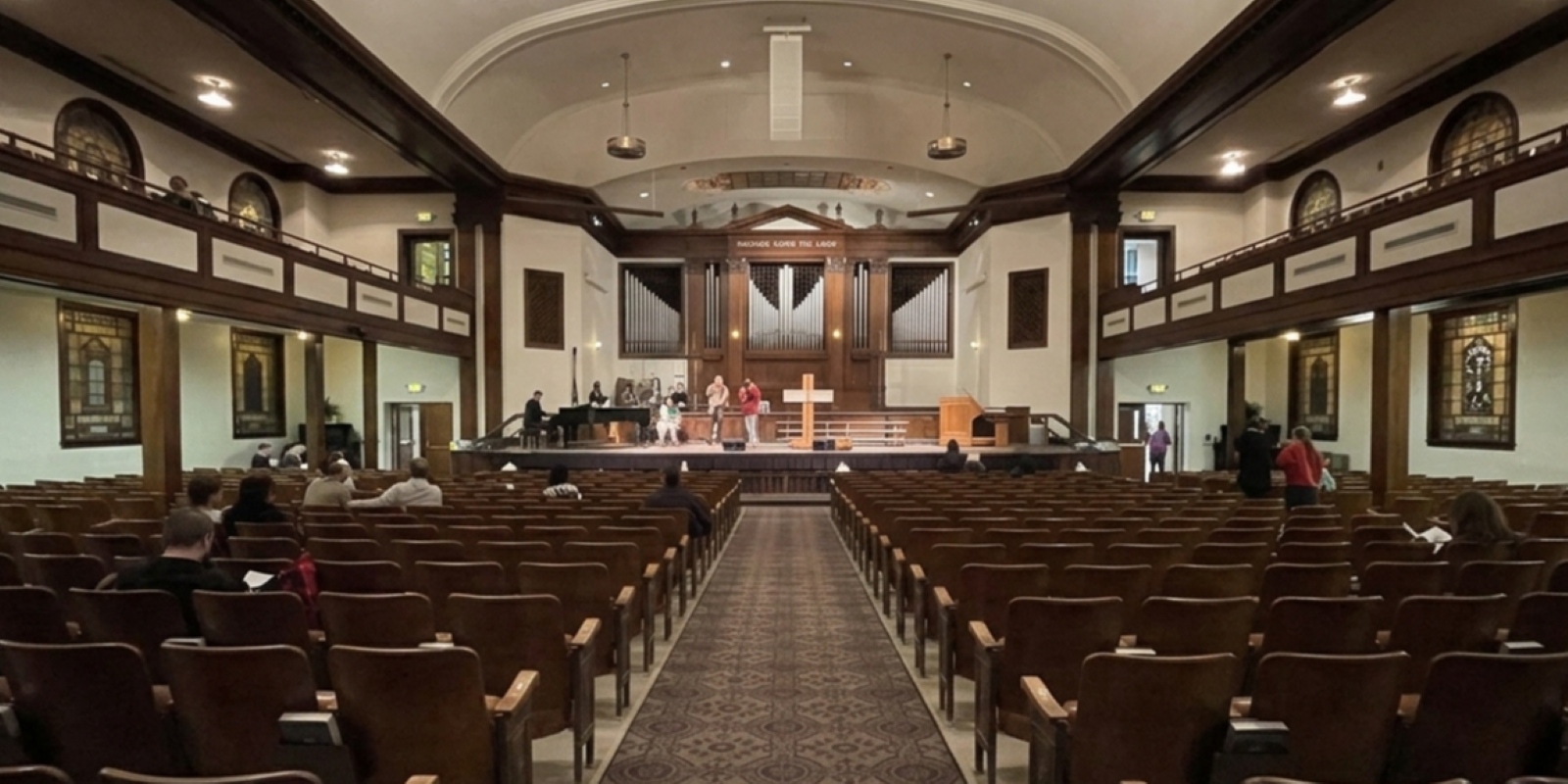
The revival produced real spiritual fruit. New people came into the church, people were saved, and positive effects continued after the main gatherings. On the campus, one result was the beginning of a 24/7 prayer room. This shows that revival is not only an intense event; it can also lead to ongoing practices that continue to shape a community.
Students from many universities came during that time. Nearly three hundred different universities were represented. This is significant because a university is different from a local church. When revival happens in a church, the natural desire is often to gather as many people as possible in that place. But a university exists to send students out. Students remain for a season and then go into many different locations, callings, and ministries.
In this sense, the revival at Asbury was not only about what happened on campus. It was also about what God might do through students after they were sent out. Godâs work in one place became a seed for many other places.
Preceding Prayer: Preparing the Way
The first kind of prayer is preceding prayer. This is prayer that goes before something. It is more than an introduction; it is prayer that prepares the way for what is coming. John the Baptist preceded Jesus by preparing the way for Him. In a similar way, preceding prayer prepares spiritual ground for Godâs work.
Luke 2 gives the examples of Simeon and Anna in the temple. They waited, prayed, and lived in expectation that the Messiah would come. Their prayer was not passive. It was persistent, hopeful, and rooted in Godâs promises. They believed that God had spoken and that His promises would be fulfilled.
At Asbury there was also a history of revival. Over many years, a number of revivals had taken place at the school. That history created expectation. People could say, âGod has worked here before; He can do it again.â A past work of God became a reason to pray with faith for a renewed work of God.
This same principle can be seen in other places with histories of revival. When a church, city, or nation has seen God move powerfully in the past, that memory can become a call to prayer. The prayer becomes: âLord, we have seen You work in this way. Come and do it again.â
Persistent Prayer and Expectation
Colossians 4 calls believers to be persistent in prayer and to keep praying with thanksgiving. Persistence means that believers continue to seek God and do not quickly give up. It is a holy pursuit of God: âLord, we want to find what You have for us. We are coming after You in prayer.â
Faith and belief are often discussed in Christian prayer, but expectation helps clarify what those words mean. Many Christians say, âI believe,â but when they pray, they do not actually expect God to change anything. Real faith includes expectation. It asks: âWhat do I expect God to do when I pray?â
Preceding prayer carries this expectation. It believes that God can act, that God can make something happen, and that Godâs past faithfulness points toward future possibility. It does not treat revival as a relic of history. It treats the past as a testimony that calls the present generation to prayer.
Reminding God of His Promises
Another aspect of preceding prayer is reminding God of what He has said and done. In Exodus 32, when Israel sinned with the golden calf, Moses cried out to God on behalf of the people. He reminded God of His promises and asked Him not to destroy them. This is not because God forgets, but because covenant prayer appeals to Godâs own character and word.
Acts 4 gives another example. The early church prayed boldly and asked God to stretch out His hand, heal, and perform signs and wonders in the name of Jesus. They did not see Godâs power as something locked in the past. They prayed for God to act again in their own time.
For believers today, past revivals and past acts of God are not only historical memories. They become reminders and invitations. We can pray, âLord, You have done this before. Help us to see Your work again. Show Your power, restore Your people, and glorify the name of Jesus.â
Prayer That Does Not Give Up
Luke 18 tells the story of the persistent widow. Jesus introduced the story so that His disciples would learn to pray and not give up. This is the central point. The passage may touch themes of justice and the coming of Godâs kingdom, but its direct purpose is to teach perseverance in prayer.
Some people think that strong faith means praying only once and never asking again. But Jesus teaches His disciples to continue praying. Persistence is not unbelief. Persistence is the refusal to stop seeking God when the matter is important and when we believe God is calling us to continue.
To pray persistently means to stay with the burden. It means to keep bringing the need before God, to keep seeking His face, and to keep trusting His goodness even when the answer is not immediate.
Intercession: Praying for Protection and Need
Intercession is prayer on behalf of others and on behalf of situations. During the Asbury Revival, intercession included prayer for people who were present, but also prayer over the whole place and everything happening there. People prayed for spiritual protection, for freedom from disruption, and for Godâs purposes to continue.
Intercession responds to needs. Some needs are deeply spiritual, but others are very practical. When tens of thousands of people gather, they need food, bathrooms, organization, safety, and ways to enter and move through the space. These practical needs also became matters for prayer.
Philippians 4:19 teaches that God supplies the needs of His people according to His riches in Christ Jesus. Intercession brings needs before God and asks Him to provide wisdom, resources, people, and solutions. It recognizes that nothing is too ordinary to bring before the Lord.
Intercession and Discernment
Intercession is also connected to discernment. James 1:5 says that if anyone lacks wisdom, they should ask God, who gives generously. In prayer, believers ask God to show what He is doing, how He is working, and how they should respond.
Discernment is especially important in difficult situations. Sometimes God brings redemption even through circumstances that are painful or unexpected. A broken relationship, a crisis, or a frightening event may become an opening for reconciliation and healing. This does not mean that evil is good, but it means that God can work redemptively even in the middle of hard circumstances.
Intercession helps believers see beyond the surface of events. It asks: âLord, what are You doing here? How can we cooperate with Your redemptive purpose?â
Prayer Ministry and Communicating Christ
Prayer ministry, or altar ministry, is the practice of praying personally with others and ministering to them in the presence of God. This kind of ministry must communicate Christ not only through words but also through attitude, tone, and character.
Matthew 11:28â30 is central for understanding the character of Christ. Jesus invites the weary and burdened to come to Him for rest, and He describes Himself as gentle and humble in heart. Therefore, those who pray for others must reflect the kindness and gentleness of Christ.
Many people have been wounded by prayer ministry. Some have been told, âYou do not have enough faith,â or âIf you believed more, you would be healed.â Instead of prayer becoming a healing experience, it became a place of shame or pain. This must not be the character of Christian prayer ministry.
To minister in prayer is to steward a holy moment. Stewardship means caring for what the Holy Spirit is doing. The goal is not to control the moment, dominate the person, or display spiritual power. The goal is to create space where the Holy Spirit can work freely.
Joining the Work of the Spirit
Acts 10:38 describes Jesus as the One anointed with the Holy Spirit and power, who went about doing good and healing all who were under the power of the devil, because God was with Him. This verse joins together goodness, healing, deliverance, and the presence of God.
Jesus was not known only as a healer or only as a deliverer. He was also known as good. His character mattered. In the same way, those who minister in the power of the Spirit must also reflect the goodness of Jesus.
Character is not secondary in ministry. It matters how we speak, how we treat people, and whether we reflect the love of Christ. When people encounter Christian ministers, they should be able to recognize something of Jesusâ compassion, humility, and kindness.
Consecration: Pure Hearts and Pure Motives
Consecration means being set apart fully for Godâs purposes. During the Asbury Revival, worship continued day and night, and worship leaders were needed constantly. Early in the revival, one person offered to help lead worship, but it quickly became clear that the personâs style did not fit the spirit of what God was doing. It felt performative and self-promoting rather than humble and attentive.
In response, a consecration room was established behind the stage. Those who were going to lead worship or speak publicly first went there for prayer. The purpose was to discern whether this was the right person, the right time, and the right way to serve. Sometimes people were told that it was not the right moment for them. At other times, people were deeply touched by God in that prayer space.
Consecration asks: âHow can I come before the Lord with a pure heart and pure motives?â This question is not only for people on a stage. It applies to all areas of life. Even something like social media can challenge purity of heart and motive, because it can easily become a place of self-promotion, comparison, or divided attention.
Consecration means saying, âI am committing myself completely to the purpose of God. This belongs to Jesus Christ. This is set apart for Him.â
Consecration, Confession, and Humility
Consecration creates space for confession. Confession is not only about obvious or serious sins. Often it means recognizing areas where we have not allowed Jesus fully into the center of a situation. We may be holding something back from God. Confession names that resistance and gives the matter fully to Christ.
Consecration also requires humility. Those who spoke from the stage during the revival prayed not only that people would receive the message, but also that they themselves would speak with humble hearts. The concern was not simply effectiveness, but posture before God.
The president of the university modeled this humility. When he spoke, he did not emphasize his title or importance. He simply introduced himself as someone who worked at the university. Other well-known scholars and speakers served quietly as ushers, doorkeepers, and intercessors. Some stood in the balcony corners and prayed over the room, never demanding the microphone or insisting on public recognition.
This is a mark of true consecration: being glad that God is glorified, even when someone else is visible and we are hidden. Humility says, âI do not need this to happen through me or in my preferred way. I want the name of Jesus to be lifted up.â
Collective Prayer and Shared Response
Collective prayers were prayers led from the stage in which the whole congregation participated. These were not only prayers spoken by one person while everyone else listened. People were invited to turn to one another, pray in small groups, and respond together to what God was doing.
Collective prayer helps move a gathered community toward active participation. It allows the whole body to respond to God, rather than leaving ministry only to those on the platform. It also reinforces scriptural values that should shape revival: restoration, repentance, confession, unity, and love.
Restoration of Broken Relationships
One of the great needs of this generation is the restoration of broken relationships. Many people live with brokenness in families, friendships, extended families, and churches. People stop speaking to one another and then justify that separation again and again.
Luke 15, the story of the prodigal son, is a story of restored relationship. The son returns, but the father also runs toward the son. Restoration involves movement from both sides. It is not only one person coming back; it is reconciliation made possible by grace, humility, and love.
During the revival, one man prayed that God would open a door for him to speak with his estranged daughter. As he prayed, she came up behind him, placed her hands on his shoulders, and told him she had been looking for him because she wanted to talk. This was a moment of restoration.
Sometimes it is harder to believe that God can restore a relationship than to believe He can heal a body. Relational brokenness can be deep and painful. Yet restoration is part of the work of Christ among His people.
Repentance, Confession, and Unity
Repentance means turning around. It means recognizing that one is moving in the wrong direction and then turning back toward God. Repentance changes the path and reorients the person toward the Lord.
Confession means recognizing and naming what is wrong. It brings sin, resistance, and brokenness into the light of God. Confession is closely connected to repentance because what is confessed must also be surrendered and turned away from.
Unity is also essential. Unity does not mean uniformity. It does not mean everyone has the same personality, style, opinion, or background. Unity means that love is present among the people of God and that differences do not destroy fellowship. God wants to work among His people in such a way that love holds them together.
Plurality of Leadership and Stewarding Revival
In seasons of intense spiritual activity, leadership must be shared and accountable. One safeguard during the revival was plurality of leadership. Decisions were not made by one person acting alone. In the consecration room, groups prayed together for those who would go on stage. In prayer ministry, several leaders helped oversee and respond to needs.
This matters because one leader imposing personal preferences can create problems. It can become more about one personâs way of doing things than about sensitivity to the Holy Spirit. Shared leadership helps protect the work from control, pride, and imbalance.
Stewarding revival means making room for the Holy Spirit without allowing disorder, manipulation, or self-promotion to take over. It requires humility, discernment, accountability, and a willingness to serve Godâs purposes rather than personal agendas.
Conclusion
The five prayers connected with the Asbury Revival show that prayer has many dimensions. Preceding prayer prepares the way. Persistent prayer refuses to give up. Intercession brings needs, protection, and discernment before God. Prayer ministry communicates Christ through gentleness and care. Consecration sets people apart with pure hearts and humble motives. Collective prayer invites the whole community to respond together.
At the center of all these prayers is one desire: that God would be glorified and that the name of Jesus would be lifted up. Revival is not sustained by performance, control, or human importance. It is sustained by humble hearts, faithful prayer, love for others, and openness to the work of the Holy Spirit.